Why Is My Dog Moving Strangely?
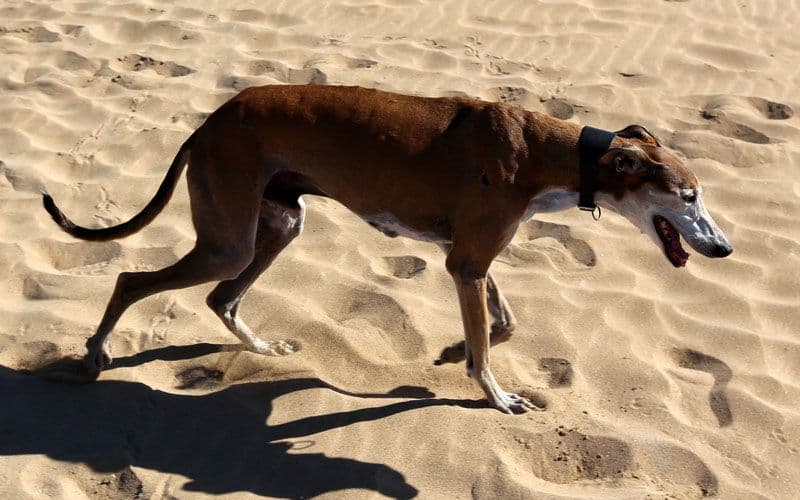
Noticing your dog moving strangely? Learn what subtle changes in movement may indicate and how gait patterns reflect overall physical function.
Why Does My Dog Seem to Be Moving Strangely?
Changes in how a dog moves are often one of the first visible signs that something in the body may be different. Owners often notice limping, stiffness, uneven steps, or unusual posture and describe it simply as “moving strangely.” While the phrase is informal, it reflects an important observation: movement is closely linked to overall physical function.
Dogs rely on coordinated systems—muscles, joints, nerves, and sensory feedback—to move smoothly. When one part of that system changes, movement patterns may change as well. These changes are sometimes subtle and may come and go, making them easy to overlook at first.
Understanding what movement changes can indicate helps shift the focus from guessing to more careful observation of patterns.
What Might “Strange” Movement Look Like?
“Strange” movement can present in different ways depending on the dog and the situation. It is not limited to obvious limping. Many dog gait problems begin with small changes that can be easy to miss.
Common examples include:
- Uneven stride length between legs
- Hesitation when starting movement
- Stiffness after rest
- Head bobbing or shifting weight
- Slower or less fluid motion
- Changes in posture, such as a lowered head or rounded back
These changes may appear only during certain activities, such as running, turning, or going up and down stairs. In early stages, a dog may still appear normal most of the time.
How Movement Is Normally Coordinated
Normal movement depends on timing, balance, and communication between the brain and body. Dogs continuously adjust their position using sensory input from joints, muscles, and the environment.
This process is known as proprioception, referring to the body’s awareness of position and movement. It allows dogs to place their feet accurately, maintain balance, and adapt to different surfaces.
For a deeper understanding of this concept, see Balance, Coordination, and Proprioception in Dogs.
When coordination is disrupted—even slightly—movement may appear less smooth or controlled.
Why Dogs May Develop Changes in Gait
There is rarely a single reason why a dog suddenly appears to move differently. Instead, movement reflects a combination of factors that influence how the body functions.
These may include:
- Physical structure and joint alignment
- Muscle strength and balance
- Nervous system coordination
- Growth and stage of development
- Fatigue or accumulated physical stress
For a broader view of these influences, see 5 Factors That Shape How Dogs Move.
Changes in any of these areas can alter how forces move through the body during motion, leading to visible differences in gait.
Temporary vs Ongoing Changes
Not all movement changes suggest something serious. Some are temporary and may resolve as the body recovers or adapts.
Temporary changes may occur after:
- Unusual activity or increased exertion
- Slipping or minor missteps
- Fatigue following longer-than-usual exercise
However, ongoing or recurring changes may suggest that the body is not adapting as expected. Patterns that persist over time are often more relevant than isolated incidents.
Observing whether a change improves, worsens, or remains the same can provide useful context.
Subtle Signs That May Be Overlooked
Some of the earliest indicators of dog gait problems are not obvious limps. Instead, they may appear as small shifts in behaviour or movement quality.
These may include:
- Reluctance to jump or climb
- Turning differently in one direction
- Shifting weight when standing
- Changes in how the dog sits or lies down
- Reduced willingness to engage in activity
Because these signs often develop gradually, they may only become noticeable when compared to how the dog moved previously.
Movement Reflects the Whole Dog
It can be helpful to think of movement as a reflection of the entire system, rather than just one part of the body. A change in one area may lead to compensations elsewhere.
For example:
- A dog avoiding pressure on one leg may shift weight to others
- Reduced stability may lead to slower, more cautious movement
- Changes in coordination may influence balance and posture
These adaptations can make the underlying issue more difficult to identify based on appearance alone.
Why Early Observation Is Important
Changes in movement often appear before more obvious signs of discomfort. Paying attention early allows for a clearer understanding of patterns and progression.
Rather than focusing only on whether something looks “wrong,” it may be more useful to consider:
- When the change first appeared
- Which activities make it more noticeable
- Whether it is consistent or intermittent
This type of observation helps build a more complete picture of what may be influencing movement.
When to Take a Closer Look
While occasional variation in movement can be normal, certain patterns may warrant closer attention.
These include:
- Movement changes that persist for several days or longer
- Recurring changes after activity
- Increasing stiffness or asymmetry
- Reduced willingness to move or play
These patterns may suggest that the body is not responding as expected to physical demands.
Rethinking Movement Changes
The question “why is my dog moving strangely” often comes from noticing something unfamiliar. Rather than looking for a single cause, it may be more helpful to understand movement as a dynamic process.
Dogs are constantly adapting to internal and external factors. Movement changes are not random—they reflect how the body is responding at that moment in time.
By focusing on patterns, coordination, and overall function, movement can be viewed as useful information rather than simply a symptom.
References
- 📚 [1]Zink MC & Van Dyke JB (2025). Canine Sports Medicine and Rehabilitation.. Wiley-Blackwell.
- 📄 [2]Gillette RL & Angle TC (2008). Recent developments in canine locomotor analysis. The Veterinary Journal, 178(2).
- 📄 [3]Bockstahler BA, Gesky R, & Mueller M (2012). Effects of leash side and handler movement on pressure distribution and gait in dogs.. The Veterinary Journal, 193(3).
- 📄 [4]Waxman AS (2008). Kinematic analysis of the gait of healthy dogs.. American Journal of Veterinary Research, 69(2).