New Puppy – Physical Development from 8 Weeks to 4 Months
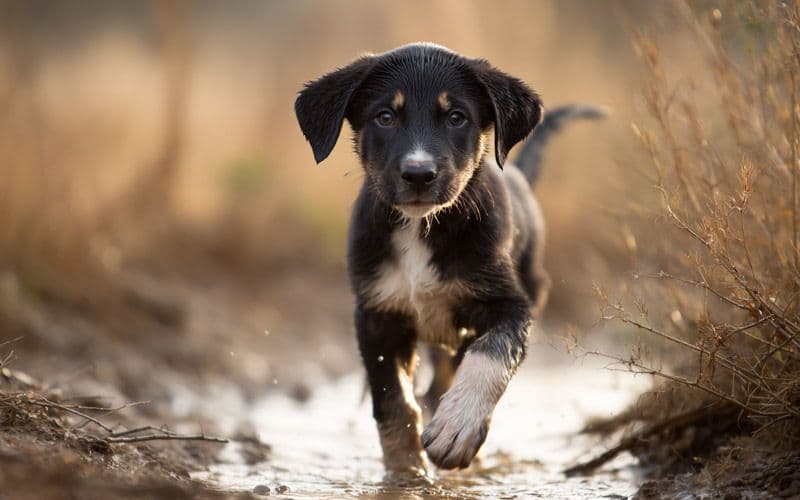
Learn about physical development in puppies (8–16 weeks), including coordination, growth, and early movement mechanics that shape lifelong health.
The early weeks of a puppy’s life at home are often focused on socialization. Physical development during this period is just as important. Between 8 weeks and 4 months, a puppy’s body is undergoing rapid change. Bones are growing, joints are forming, and the nervous system is learning how to coordinate movement.
Physical conditioning at this stage is not about structured exercise or performance. It is about exposure, coordination, and safe development. The way a puppy learns to move during this period can influence posture, efficiency of movement, and long-term health.
Why Early Puppy Physical Development Matters
Early physical development shapes how a puppy moves. At this stage, puppies are not building strength in a traditional sense—they are learning how to use their bodies:
- How weight is distributed across limbs
- How the spine stabilizes during movement
- How the body adapts to different environments
⚠️When early puppy development experiences are limited or unstable, puppies may develop habits that make movement less efficient and put uneven stress on their joints over time. This becomes critical for sports like Agility, Flyball, etc.
Growth, Structure, and Development Between 8 and 16 Weeks
During this stage, skeletal growth is rapid and uneven. Growth plates remain open, and the supporting structures around joints are still developing:
- Bones are still soft and forming
- Joints rely more on soft tissue support
- Muscles are not yet fully stabilizing the body
- Ongoing changes in proportions
Because of this, the body is adaptable but also vulnerable. Even small amounts of repeated stress or instability can influence how structures develop over time.
→ Related: Protecting Your Puppy’s Growth Plates
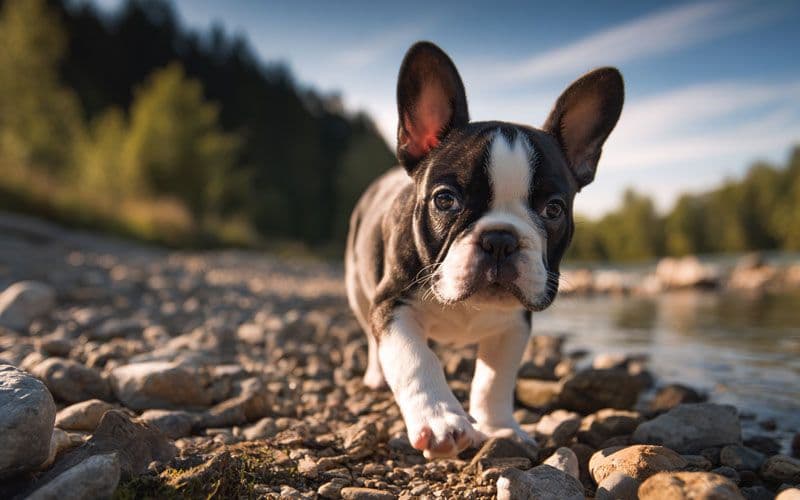
Puppy Coordination Development
Coordination is not automatic. Puppies must learn how to control their bodies through interaction with their environment:
- Balance and body control
- Coordinating their limbs
- Awareness of body position (proprioception)
- Integration between brain and movement
This is often referred to as neuromuscular development. What appears as clumsiness is part of a learning process in which the nervous system refines movement mechanics.
📌Variation in movement, rather than repetition, plays a key role in building efficient coordination.
→ Related: Balance, coordination, and proprioception in dogs
How Surfaces and Environment Influence Puppy Movement
The environments puppies experience shape puppy movement development. Different surfaces provide different types of feedback:
- Natural ground (grass, dirt) introduces mild variability and grip
- Smooth indoor flooring can reduce traction and stability
- Textured or rubber surfaces improve confidence and control
- Uneven terrain challenges joint stabilization and coordination
⚠️A limited range of environments can restrict development, while inappropriate surfaces, particularly slippery ones, can contribute to instability and altered movement.
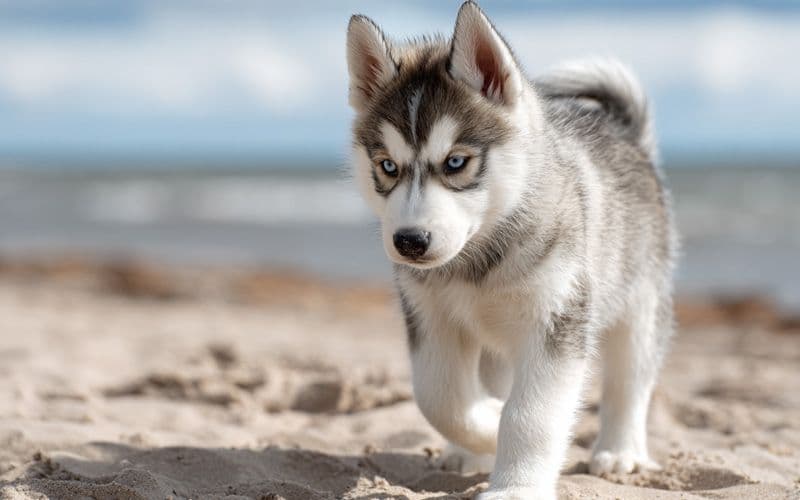
Developing Body Awareness and Early Stability
Body awareness is the ability to understand where the body is in space and how it is moving. This ability develops gradually during early life.
During this stage, puppies begin to develop:
- Awareness of limb placement
- Control of the spine and core stability
- The ability to adjust to small changes in terrain
These early abilities form the foundation for more complex movement later in life, including sport, work, and daily functional activities.
The Connection Between Physical and Mental Development
Physical and mental development are closely linked. Movement challenges are not only physical. They also shape how a puppy interacts with the world.
As puppies explore:
- They learn how to solve movement-related problems
- They build confidence in their bodies
📌A puppy who feels physically capable is more likely to engage with new situations and recover from uncertainty.
This connection between movement and confidence plays a role in both behavior and long-term adaptability.
Common Physical Risks in Young Puppies
During this stage of development, certain risks can have a greater impact.
Important considerations include:
- Repetitive high-impact movement during growth
- Reduced traction leading to instability
- Fatigue-related changes in movement
- Limited exposure to varied environments
⚠️Puppies may not clearly signal discomfort. Changes in coordination, willingness to move, or movement symmetry can be early indicators that the body is under stress.
Key Takeaways
- Early physical conditioning is about development, not performance
- Puppies between 8 and 16 weeks are adaptable but physically vulnerable
- Varied environments and surfaces support coordination and stability
- Movement during this stage builds body awareness and confidence
- Early experiences can influence lifelong movement and health
References
- 📚 [1]Zink, M. C. & Van Dyke, J. B. (2013). Canine Sports Medicine and Rehabilitation. Wiley-Blackwell.✓
- 📚 [2]Levine, D., Millis, D. L., & Taylor, R. A. (2014). Canine Rehabilitation and Physical Therapy. Elsevier.✓
- 📄 [3]Smith, G. K. (1995). Developmental factors influencing canine orthopedic health. JAVMA, 206(5).✓
- 📄 [4]Adolph, K. E. & Hoch, J. E. (2019). Motor development: Embodied, embedded, enculturated, and enabling. . Annual Review of Psychology. https://doi.org/10.1146/annurev-psych-010418-102836✓